GPNI champions healthier food environments by working with the most under-supported yet critical actors in food production: small and medium enterprises (SMEs) and large in low- and middle-income countries (LMICs).
Our work complements existing global nutrition efforts by localizing solutions, addressing inequities in the supply chain, and amplifying the voices of small producers and local innovators. We’re not here to replace; we’re here to connect, support, and catalyze.
GPNI’s work is aligned with the UN Food Systems Summit Action Tracks, the WHO Global Strategy for Infant and Young Child Feeding, and the Sustainable Development Goals (SDGs), particularly SDG 2 (Zero Hunger), SDG 3 (Good Health and Well-being), SDG 12 (Responsible Consumption and Production), and SDG 17 (Partnerships for the Goals).
GPNI is a movement to restore dignity to children’s diets, to elevate local food producers as agents of change, and to ensure that every bite a child takes supports their growth, development, and future. This strategic framework is both a roadmap and a rallying cry for governments, partners, and communities to join GPNI in building a healthier, more equitable food future.
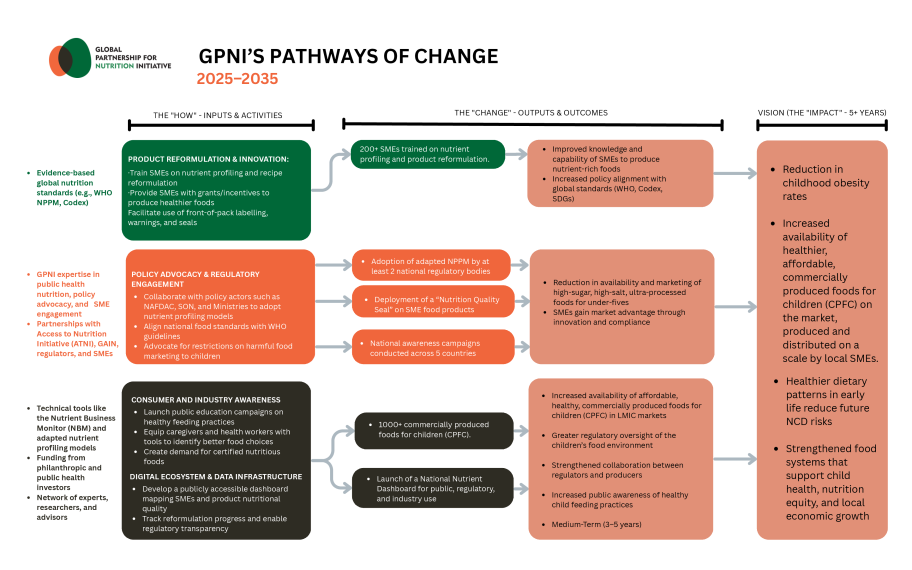
GPNI’s integrated model — addressing supply (product reformulation), policy (regulatory frameworks), and demand (consumer and industry awareness) aligns with the UN’s vision for resilient food systems that:
By partnering with global actors like ATNI and aligning with international frameworks, GPNI is positioned to scale impact across multiple countries while maintaining strong local relevance and accountability.
Our model offers a replicable, evidence-based blueprint for other nations seeking to improve child nutrition through policy integration, private sector transformation, and informed public engagement.
Our approach is to build the capacity of SMEs to produce foods that meet global nutrition standards while remaining culturally relevant, nutritious, affordable, and accessible to the communities they serve. We work directly with SMEs to reformulate products, adopt transparent labelling, and align with national and international regulations on nutrient profiling and food marketing to children.
SMEs are the backbone of the food system in LMICs, contributing over 70% of locally produced packaged food for young children. However, they often operate in resource-constrained environments—with limited access to technical expertise, quality standards, and support for reformulation. Rather than vilify them, GPNI seeks to empower them.
To transform the global food environment for children in low- and middle-income countries (LMICs) by empowering SMEs, strengthening regulatory frameworks, and promoting healthier, affordable commercially produced foods for children (CPFC). —ultimately reducing diet-related diseases and improving early childhood nutrition outcomes.
By 2035, we’re poised to empower and help to transform global nutrition.
Would you rather join the cause?


SMEs supported to innovate nutrient-rich products
Countries adopt national nutrient profiling standards informed by GPNi tools
Caregivers reached with improved nutrition awareness through campaigns
By 2035, we’re poised to empower and help to transform global nutrition.
Would you rather join the cause?